Alaska Travel Guide 2026: Your Bucket List Adventure Starts Here
After more than two decades of guiding visitors through Southeast Alaska’s wilderness, we’ve learned that the difference between a good Alaska trip and an unforgettable one comes down to planning. Not the kind that strips away spontaneity, but the kind that helps you make smart decisions about when to come, where to go, and how to experience this place authentically.
Alaska isn’t a destination you can wing. The weather changes by the hour, wildlife operates on its own schedule, and the sheer scale of wilderness here demands respect. But when you get it right, Alaska delivers moments that stay with you forever.
When Should You Visit Alaska?
Most people assume summer is the only time to visit Alaska, which makes sense. The statistics back it up, with roughly 90% of Alaska’s visitors arriving between May and September. But summer in Alaska spans multiple micro-seasons, each with distinct advantages.
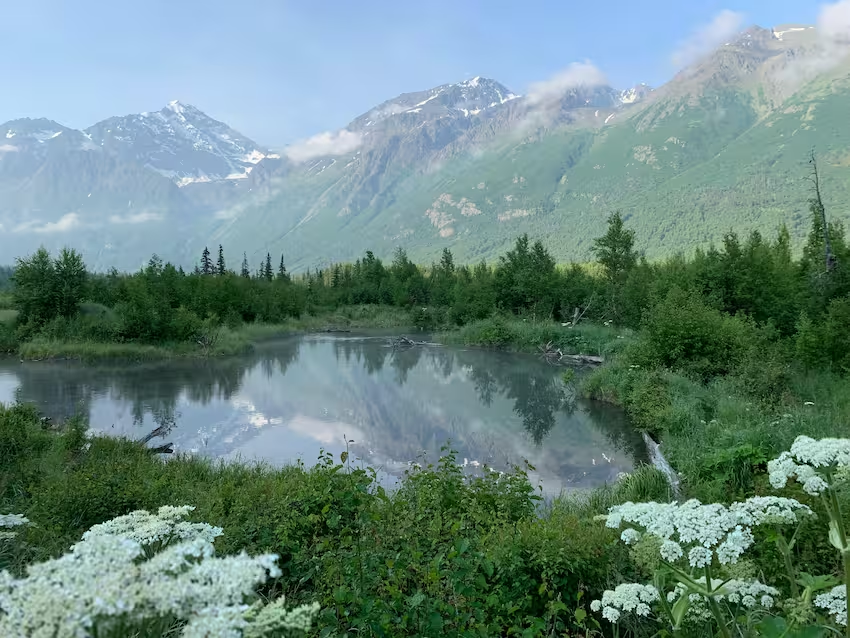
Late May through mid-June brings nearly 20 hours of daylight and the explosion of spring. The forests around Juneau turn impossibly green, wildflowers carpet the meadows, and you’ll find fewer crowds at popular sites. The trade-off is that the weather can be unpredictable, and some high-elevation trails stay snow-covered into June. But if you want to kayak in quiet waters or hike without sharing the trail, this window is hard to beat.
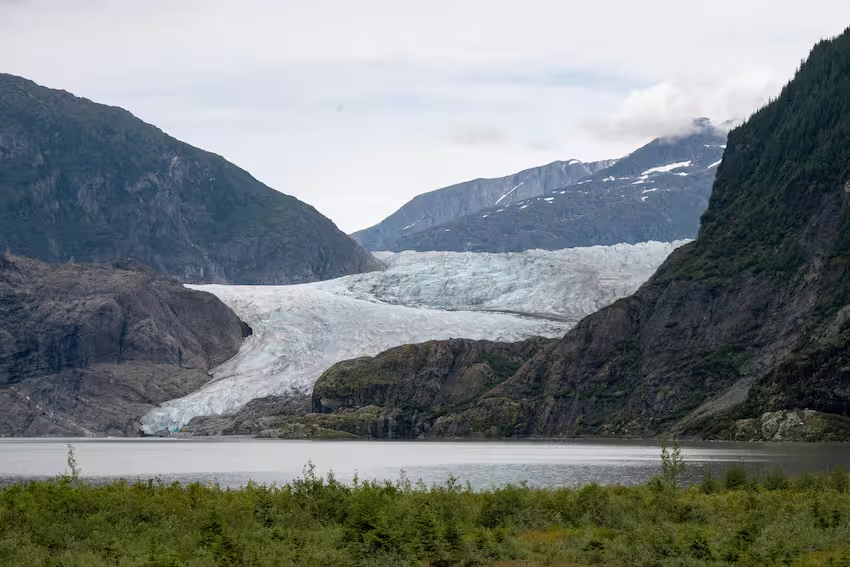
Mid-June through August is the peak season for good reason. This is when weather stabilizes, all trails open, and wildlife activity peaks. Humpback whales feed heavily in our waters during these months. Black bears forage along shorelines and salmon streams. The long daylight hours mean you can pack more into each day. You’ll encounter more visitors at places like Mendenhall Glacier, but there’s a reason everyone wants to be here, since the conditions are ideal.
September offers something special that many overlook. Crowds thin dramatically after Labor Day, yet weather often stays pleasant through mid-month, and if you’re lucky, can last until October. The fall colors transform the landscape, and wildlife remains active as animals prepare for winter. We’ve guided some of our favorite tours in September, when the quality of light changes and the whole landscape takes on a different character.
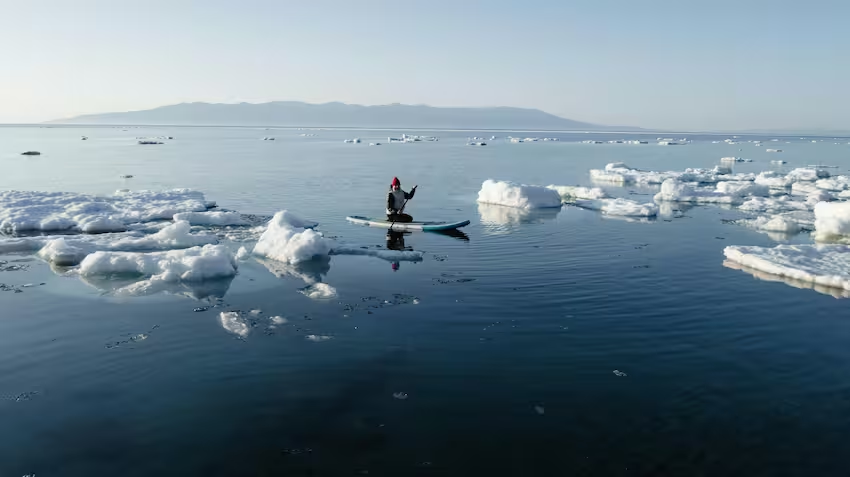
Winter travel is a different animal entirely. If you’re considering an off-season trip, understand that many tour operators close, daylight shrinks to just six hours by December, and weather becomes a serious factor. That said, winter in Alaska has its perks, such as aurora viewing, ice climbing, heli-skiing, and the stark beauty of frozen landscapes create experiences you simply can’t have in summer.
Where Should You Focus Your Time in Alaska?
Alaska is massive, more than twice the size of Texas (three times the size at low-tide), and trying to see everything in one trip sets you up for disappointment. Based on years of guiding visitors, Above & Beyond Alaska recommends picking a region and exploring it properly rather than rushing between destinations.
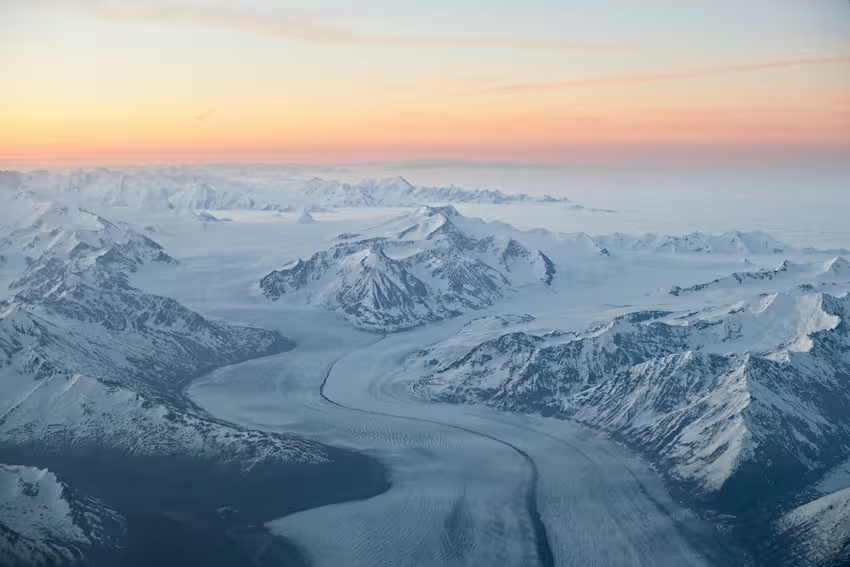
Southeast Alaska, where we’ve spent our career, centers around the Inside Passage. This is Alaska’s temperate rainforest zone, where steep mountains rise directly from the sea and glaciers flow down from the Juneau Icefield. Juneau serves as the ideal base for exploring this region. You can kayak among icebergs one morning and hike through old-growth forest that afternoon, or explore the nearby wilderness on a float plane adventure. The Tongass National Forest, the largest temperate rainforest in the world, surrounds us here.
Juneau and Southeast Alaska stand out for their unique combination of accessibility and wildness. You can encounter humpback whales on a morning boat tour and be face-to-face with a tidewater glacier by afternoon, all without the logistical complexity of remote backcountry travel. Juneau offers direct access to Mendenhall Glacier, just 13 miles from downtown, along with dozens of hiking trails, protected kayaking waters, and wildlife viewing opportunities. For first-time Alaska visitors, Juneau and Southeast Alaska offer the best introduction to what makes this state remarkable.
Southcentral Alaska, centered around Anchorage, gives you the most developed tourism infrastructure. This region includes Kenai Peninsula, Prince William Sound, and access to Denali in the interior. If you want to combine urban amenities with wilderness access, or if you’re planning to visit Denali National Park, you’ll likely spend time in Southcentral.
Interior Alaska centers on Fairbanks and draws visitors interested in the midnight sun phenomenon, northern lights, and a more continental climate. The Interior tends to be warmer in summer and much colder in winter than coastal regions.
We won’t go deep into the Arctic or Southwest regions here, as these require significantly more planning, budget, and time. They’re spectacular, but not where most first-time visitors should focus their energy.
What Activities Should You Choose for Your Alaska Trip?
People often start by asking, “What should I do?” But the question that leads to the best results is, “What kind of experience am I looking for?”
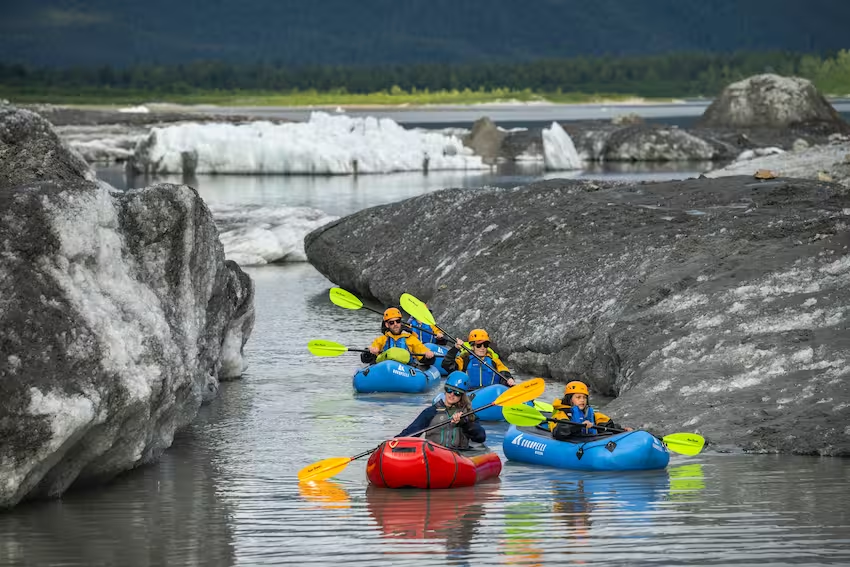
For up-close glacier encounters, you have options beyond just viewing from a distance. Kayaking near a glacier or packrafting puts you in intimate contact with ice formations, lets you hear the glacier crack and shift, and gives you perspective on a scale that viewing platforms can’t match. We’ve watched visitors’ faces change when they realize they’re paddling among ice that fell from a glacier that’s been flowing for thousands of years.
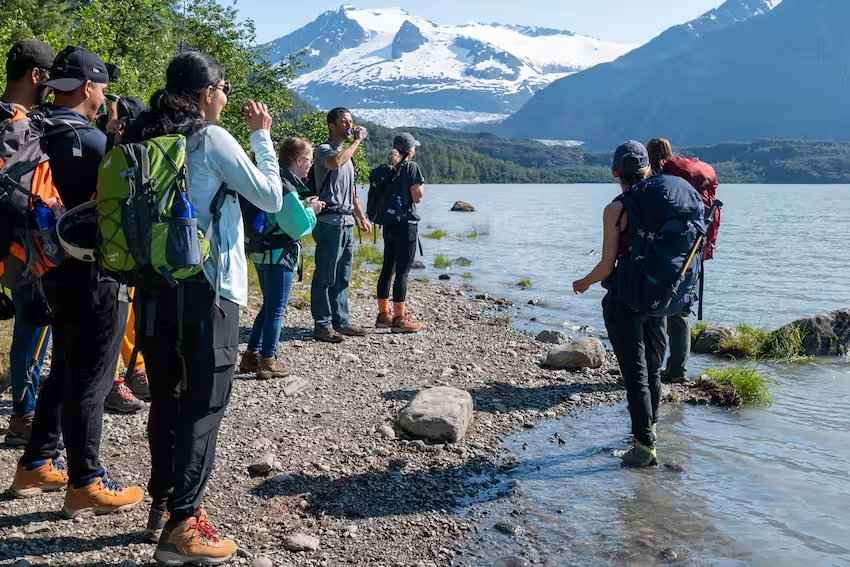
Hiking to a glacier offers different rewards. The physical effort creates a sense of accomplishment, and approaching on foot gives you time to watch the landscape transition from forest to rock to ice. Some of our trails around Juneau, like the route to Mendenhall Glacier, take you through multiple ecosystems in a few miles.
For wildlife viewing, understanding animal behavior matters more than luck. Humpback whales feed in Southeast Alaska waters throughout summer, but their activity level varies with tide and bait fish movement. Bears follow salmon runs and berry seasons. Going with experienced guides who read these patterns dramatically increases your odds of meaningful encounters.
At Above & Beyond Alaska, we’re particular about wildlife viewing ethics. Keeping proper distance, moving slowly, and letting animals control the interaction creates better experiences for everyone. The goal isn’t just to see an animal, but to watch it behaving naturally in its habitat.
For immersing yourself in wilderness, consider what level of remoteness you want. You can experience Alaska wilderness without hardcore backcountry expeditions. A day spent kayaking in Juneau’s protected waters where you see no other boats, or hiking trails that get you away from the main tourist corridors, provides authentic wilderness connection without requiring expedition-level logistics. Exploring sustainably enhances the experience for everyone.
What Practical Considerations Actually Matter in Alaska?
We’ve learned that certain practical realities make or break Alaska trips, yet visitors often overlook them while focusing on the dramatic stuff.
- Weather preparation means packing layering systems and rain gear for all conditions in a single day
- Physical readiness requires moderate fitness, so if you can hike three to four miles on uneven terrain, you’re set
- Transportation logistics in Juneau means arriving by plane or cruise ship since there’s no road connection to the rest of North America
Many visitors ask about rental cars. In Juneau, you often don’t need one if you’re staying near downtown. Tours pick up from downtown hotels, and the main attractions sit within a relatively small area. In places like Anchorage or Fairbanks, a vehicle becomes more useful.
How Do You Build a Successful Alaska Itinerary?
After guiding thousands of visitors, we’ve noticed patterns in successful Alaska itineraries. They share certain characteristics:
- Buffer days for weather turn fog delays and wind cancellations into opportunities rather than disappointments
- Balanced activity intensity means alternating active days with easier experiences to prevent burnout
- Unscheduled time allows for spontaneous moments like watching eagles fish or discovering unplanned trails
- Quality over quantity means one excellent whale watching experience beats three mediocre wildlife tours
What Should You Know Before Your Trip?
Alaska hasn’t fundamentally changed, but how we experience it continues evolving. Sustainable tourism practices have matured significantly. More operators, including us, limit group sizes, follow strict wildlife viewing protocols, and focus on low-impact activities. This benefits everyone, since visitors get better experiences, and Alaska’s wild places maintain their character.
Technology integration has improved the visitor experience without diminishing the wilderness feeling. Better communication systems mean safer remote activities. Online resources help people arrive better prepared. But once you’re on the water or trail, Alaska still feels refreshingly disconnected.
The conversation around Alaska travel has shifted toward authenticity and depth. Visitors increasingly want to understand the places they visit, not just photograph them. They’re asking better questions, seeking local expertise, and choosing experiences that create real connection to Alaska’s landscapes and ecosystems.
What Makes Alaska Different in 2026?
Planning an Alaska adventure requires research, honest self-assessment, and willingness to embrace uncertainty. The wilderness here doesn’t guarantee perfect weather or guaranteed wildlife sightings. What it does offer is the chance to experience landscapes and ecosystems that exist nowhere else, guided by people who’ve dedicated their lives to knowing this place deeply.
At Above & Beyond Alaska, we’ve been exploring the Tongass National Forest, the glaciers of the Juneau Icefield, and the waters of Alaska’s Inside Passage for over 25 years. What keeps us here isn’t just the beauty. It’s watching people discover what Alaska really means when they stop viewing it through expectations and start experiencing it on its own terms.
If you’re ready to move beyond the planning phase and start exploring Juneau’s glaciers, rainforests, and marine environments, we’d welcome the chance to share this place with you. We offer experiences by kayak, on foot, by boat, and by plane, all designed to provide genuine wilderness connection backed by deep local knowledge and technical expertise.